


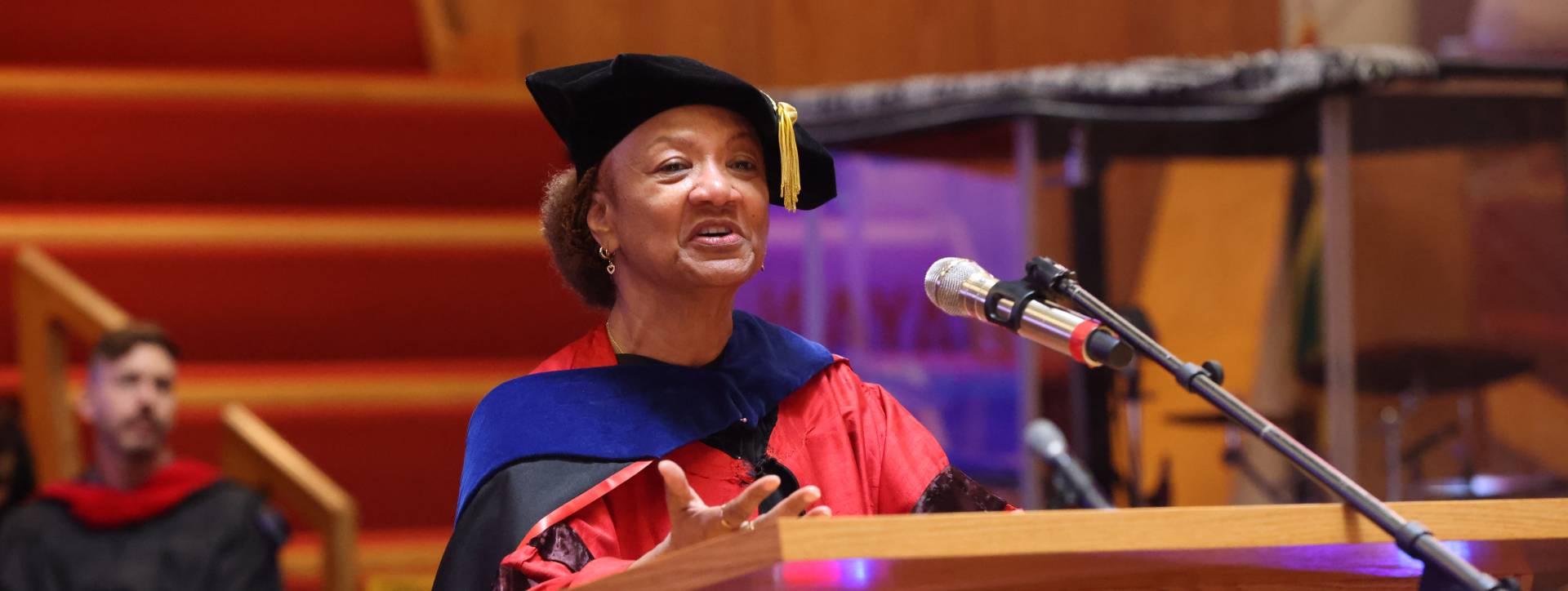
CTS is not just a seminary, it is a community – a living, breathing, organic community. Whether you join a student organization, attend a worship service, share a post or encourage a classmate, community life is a major part of the CTS experience.
On campus or online, community life is where learning intersects with living. It is where faith begins to shape into praxis. The CTS experience is more than academic, it is the relationships we build with one another and how we learn from each other.
Community Gatherings:
Wednesday Gatherings
Join us online at 5 PM on the first Wednesday of each month.
These gatherings formed out of a need during the pandemic to maintain CTS’s commitment to the continuation of “public theology” during an uncertain time. They have grown into an appreciated time of community and conversation. Wednesday Gatherings have been host to numerous important conversations, with recent topics including: “Reparations: A History of Black Economic Resistance”; “Ramadan, the Spiritual Reset”; “Being a Spiritual Leader in Troubled Times: How to Respond When Crises Are on All Fronts”; “In Times Like These: Womanist Wisdom, Womanist Works.” and “Threat and Impact of Current Policy on LGBTQ+ Community.”
These conversations allow for deeper engagement with civic and social justice issues, featuring insightful conversations with powerful community members who share the CTS vision of a more inclusive, equitable, and just world.
Other Gathering Opportunities:
Sharing Time is a weekly drop-in virtual meeting where people can come and check-in about how things are going in their personal or academic life. We come to encourage and support one another. Hosted by the Director of Student Formation and Outreach and/or the Student Chaplains.
Congregation Visits is a project where each week we feature the gathering of a different faith community. During the semester, we will invite students to participate in a variety of faith gatherings so that they could experience educational and spiritual enrichment in diverse environments. CTS Connect on Facebook hosts the Watch Parties for these various events.
CTS also hosts various annual gatherings or one-time gatherings like the Rooks and Castaneda Lectures, and smaller get-togethers like Scriptural Ghost Stories, Movie Night, Friendsgiving, Happy Hour, and more…
Spiritual Support:
Minister Deneen Collins provides care and support for CTS students
We also have a Student Chaplain program, with chaplains from diverse backgrounds that provide support and care for the students. Incoming students are matched with a chaplain but any student can be matched upon request by Deneen Collins at deneen.collins@ctschicago.edu.
Lapp Learning Commons:
Research is a critical part of your graduate school experience. That’s why CTS has amassed one of the finest libraries and literary collections anywhere. What’s more, you have access to the collections at a number of other ACTS resources. Click here for more information on the Learning Commons and other research resources available to the CTS Community.
Language & Writing Center:
Another benefit CTS offers students is our Language & Writing Center. This is a free program set up to help, support or tutor students in academic writing. So, if you have been away from school for a while or just would like someone to look over your work, we have you covered. This is especially beneficial for students whose first language is not English and may want a little extra help.
Click here for more information: https://libguides.ctschicago.edu/writingcenter
Anti-Harassment/Anti-Discrimination
General Policy Statement and Notice of Non-Discrimination and Non-Harassment
Chicago Theological Seminary is committed to fostering the full humanity of all its members. All forms of discrimination and harassment impugn the full humanity of any human being and for this reason are not tolerated in this Seminary. Chicago Theological Seminary does not discriminate, or tolerate discrimination or harassment, against any member of its community on the basis of race, color, national origin, ancestry, sex/gender, age, religion, disability, pregnancy, veteran status, marital status, sexual orientation, or any other status protected by applicable federal, state, or local law in matters of employment or admissions or in any aspect of the educational programs or activities it offers. Click here to download the full policy.
In furtherance of Chicago Theological Seminary’s commitment to the principles of equality and equal opportunity for students, staff, and faculty, we have established a policy and associated procedures in order to provide a means to address complaints of discrimination or harassment based on the protected categories (described therein). The policy has been written with the express goal of protecting the rights and concerns of both complainant and respondent. The Seminary will make every effort to assure and protect these rights, and shall undertake no action that threatens or compromises them. The complete policy, detailing prohibited acts (discrimination, harassment, and sexual harassment), defining “consensual relationships,” and setting forth procedures for addressing discrimination and harassment (including reporting, inquiry, potential resolutions and appeals) is published in the Student Handbook and updated annually.
CTS appoints a Title IX Coordinator and Title IX Deputy Coordinator who are responsible for implementing and monitoring Title IX compliance on behalf of the Seminary. In addition, CTS has developed an Anti-Discrimination/Anti-Harassment Task Force comprised of faculty, staff, and students to adjudicate formal charges (by appointment to the Investigation Team) and to develop an educational program for the community around these issues in conjunction with the Title IX Coordinators.
Current members of the Anti-Discrimination/Anti-Harassment Task Force are listed below:
- Michele Carr (Title IX Coordinator), Controller
- José Morales Torres, Assistant Professor of Latinx Studies and Religion
- Jason Frey, Dean of Students and VP for Student Services
- Karen Walker, VP of Finance and Administration
- Rachel Mikva, Herman E. Schaalman Professor of Jewish Studies
- Scott Haldeman, Associate Professor of Worship
HOUSE Liaison Process:
In accordance with the Illinois Higher Education Housing and Opportunities Act, Chicago Theological Seminary is committed to supporting students that may be at-risk of housing insecurity. Staff from Student Services have been designated as HOUSE Liaisons to support students by connecting them to on and off campus resources and removing barriers to encourage persistence and completion.

Who qualifies for support under the Higher Education Housing and Opportunities Act?
The Higher Education Housing and Opportunies Act supports “students experiencing homelessness” or “homeless student[s]” defined as: “An individual enrolled in an institution who lacks or is at imminent risk of lacking a fixed, regular, and adequate nighttime residence or whose parent or legal guardian is unable or unwilling to provide shelter and care and includes a homeless individual as defined under the federal McKinney-Vento Homeless Assistance Act. Likewise, HOUSE liaisons support “student(s) in care,” which is any person regardless of age who is or was under the care and legal custody of the department of children and family services.
What do the HOUSE liaisons do?
HOUSE liaisons serve as a liaison for students experiencing housing insecurity by connecting them to on and off campus resources. This includes but is not limited to: area Dean of Students, Office of the Bursar, Office of Financial Aid, Housing and Residence Life, social service agencies, apartment rental services, and shelters. For additional information on what happens when a student is referred to a HOUSE liaison, refer to the HOUSE liaison process above.
Who is the HOUSE liaison?
Jason Frey, Vice President of Student Services and Dean of Students
What if I need housing outside of the academic year?
The HOUSE liaison will work with you to develop a plan to mitigate your housing insecurity.
How does the HOUSE liaison educate the CTS community to better support students?
The HOUSE liaison works with CTS faculty and staff to identify students experiencing homelessness and to refer those students to the liaison. The liaison is also responsible for gathering and reporting key data on this student population to the Illinois Board of Higher Education, including the graduation and retention rate and the number of homeless students and students in care enrolled at UChicago each year.
How do I submit a referral?
To submit a referral, please email studentservices@ctschicago.edu.
Additional resources:
If you or a student you know is seeking information about local area shelters, drop-in centers, food pantries, and other resources, below you will find searchable guides with customizable filters, including zip code and eligibility requirements.
Streetlight Chicago:
Streetlight Chicago is a project of the Chicago Coalition for the Homeless that provide up-to-date information on critical resources like shelter, food, and health care.
Findhelp‘s network connects people seeking help (Seekers) and verified social care organizations that serve them. Find free or reduced-cost resources like food, housing, financial assistance, health care, and more.
Student Handbook
Additional policies can be found in the Student Handbook.